
2026-09-16 ·
Drywood Versus Subterranean Termites in Kern County
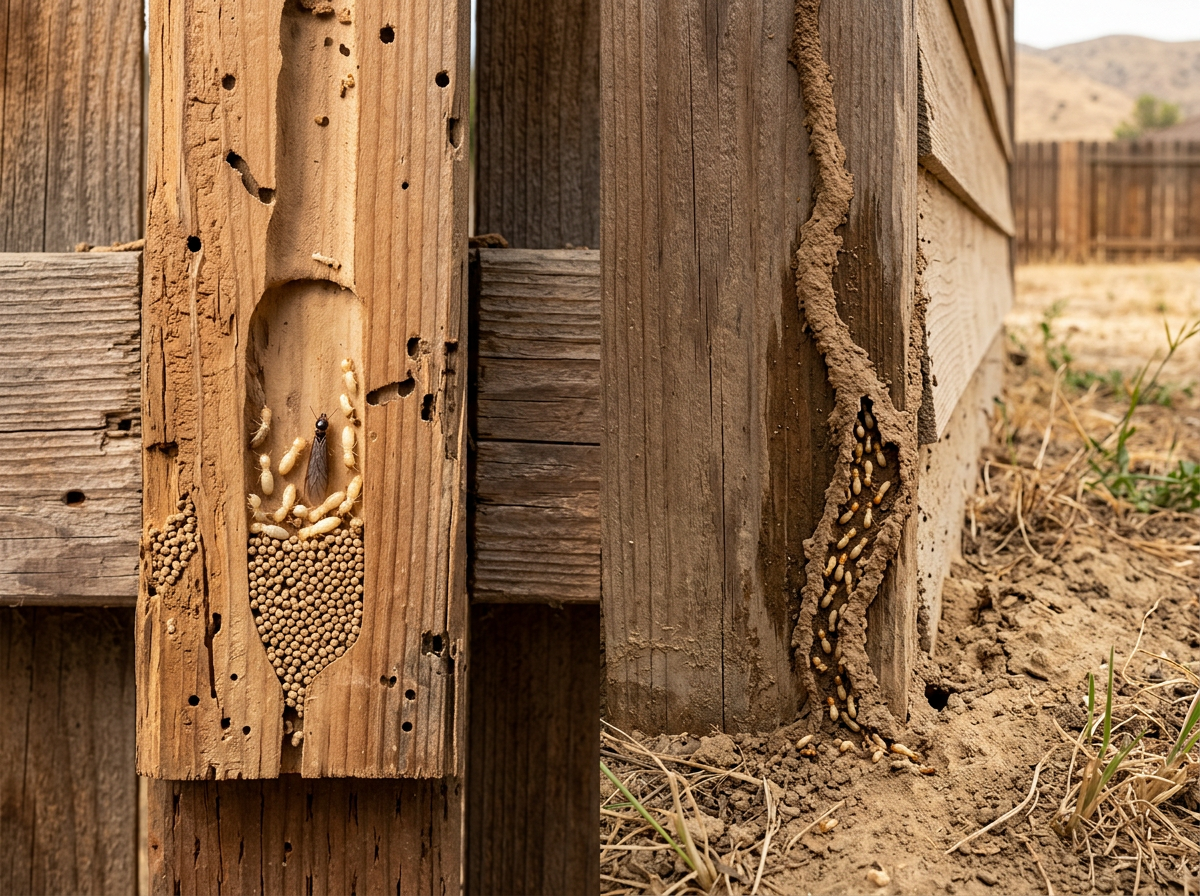
In Kern County, drywood termites are identified by loose frass pellets and are treated with fumigation or localized wood treatments, while subterranean termites leave mud tubes and require liquid soil barriers or bait stations placed around the foundation.
Identification Signs in Local Structures
Drywood termites infest dry wood above ground such as rafters, window frames, and old-growth timbers in foothill cabins with dirt crawl spaces. Homeowners notice small, six-sided frass pellets that resemble sand or coffee grounds near exit holes. Subterranean termites stay in moist soil and build shelter tubes along foundations or piers to reach wood. These tubes appear as thin mud lines that crumble when disturbed. Seasonal occupancy homes in areas like Tehachapi and Kernville often show drywood activity first because the insects do not need constant soil contact. Irrigation leaks or seasonal watering around desert-edge properties can trigger subterranean colonies by raising soil moisture near the structure.
Treatment Differences for Kern County Conditions
Drywood termites are addressed through whole-structure tenting that requires residents to leave the home for three days or through targeted spot treatments when colonies are limited. Subterranean termites are controlled by trenching soil six inches deep and six inches wide around the perimeter then applying a liquid barrier, or by installing bait stations spaced ten feet apart. Foothill cabins with limited access often receive the spot-treatment route first. Properties near California City or Mojave that receive new irrigation lines see faster results from bait stations because the stations intercept foraging workers before they reach the foundation. Both approaches begin with a thorough termite inspection that maps active areas without assuming clearance will be granted on escrow paperwork.
Local Factors Affecting Activity
Kern County’s dry summers limit subterranean spread unless irrigation or plumbing leaks create moist zones, while drywood colonies thrive in the same low-moisture wood that is common in older cabins. Seasonal occupancy leaves structures vulnerable because small leaks go unnoticed for months. Recommended clearance between soil and structural wood remains at least six inches to reduce risk. Properties in Keene or Lebec with crawl spaces containing old timber see mixed infestations when both types are present. Readers can review additional details on local climate effects in the article Termite Treatment Options for Tehachapi's Dry Climate.
Inspection Timing and Next Steps
A termite inspection before sale documents current activity so buyers understand which species is present. Drywood findings often lead to fumigation planning, while subterranean evidence points to barrier or bait work. Homeowners in Tehachapi can schedule an inspection through the Termite Inspection service page. Scheduling around winter freeze periods is covered in the related post Termite Treatment Scheduling Around Tehachapi's Winter Freeze. After inspection, treatment selection depends on the exact location of activity rather than a single method for every property.
Practical Prevention Steps
Maintain at least six inches of clearance under crawl spaces and repair irrigation leaks promptly. Remove wood debris from soil contact around the foundation. Check for frass pellets or mud tubes during routine exterior walks, especially after rain or irrigation cycles. When either sign appears, contact CA Termite Pros at 428 N Curry St, Tehachapi, CA 93561 for a site-specific assessment rather than relying on general online advice.