
2026-09-16 ·
Termite Damage Repair Considerations in Older Tehachapi Homes
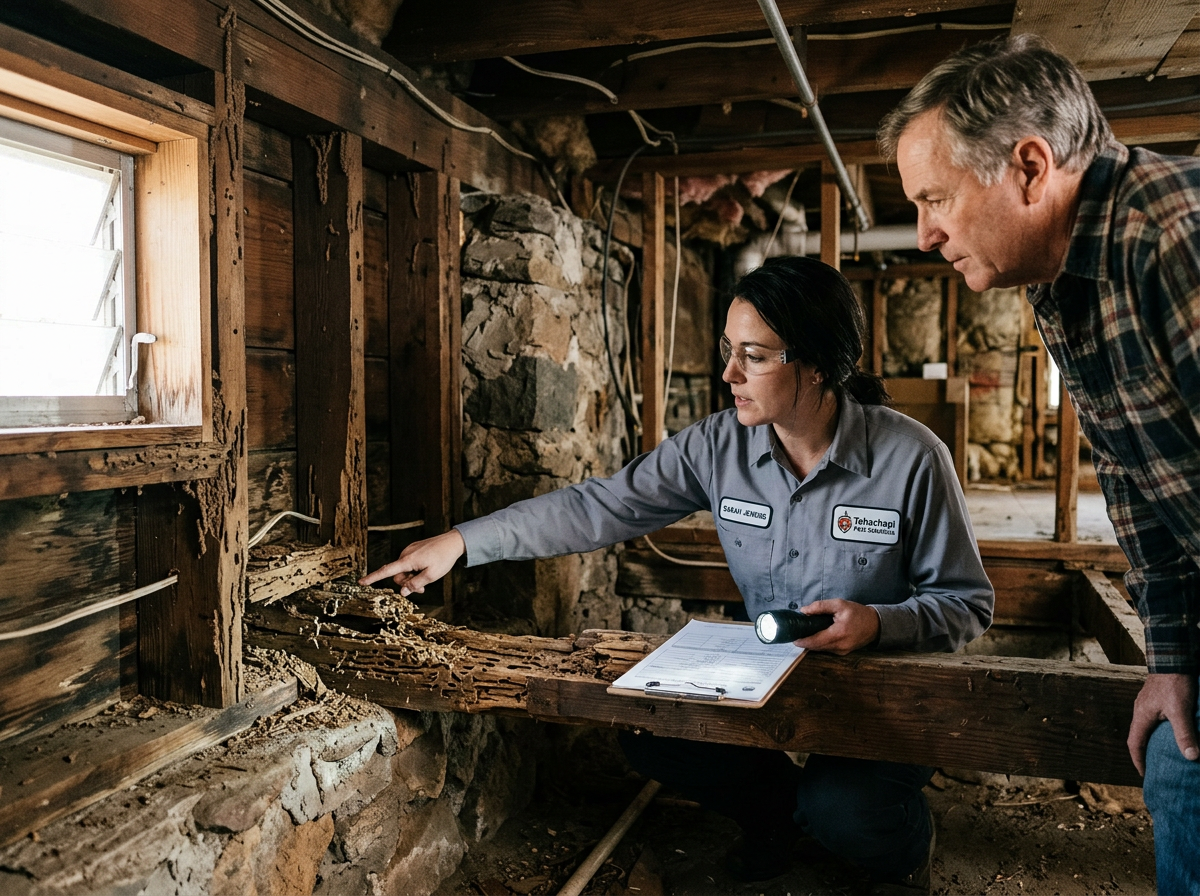
In older Tehachapi homes, termite damage repair begins with confirming the species responsible because drywood termites call for localized wood removal and spot treatments while subterranean colonies often need soil barriers or bait systems before any structural work proceeds.
Identifying Termite Type Through Damage Signs
Homeowners notice frass pellets from drywood termites in window sills or along baseboards, while mud tubes along foundation walls point to subterranean activity. Tehachapi’s foothill cabins with seasonal occupancy often show both signs because irrigation leaks in summer draw subterranean foragers and drywood colonies persist in attic beams. A professional termite inspection reveals hidden galleries in old-growth timber that visual checks miss. Once the type is known, repair crews can decide whether to cut out only damaged sections or treat soil first to stop ongoing foraging. This sequence prevents new damage from appearing weeks after wood replacement finishes.
Structural Repairs in Crawl Spaces
Crawl spaces under Tehachapi homes built before 1970 frequently have less than 18 inches of clearance between soil and floor joists, allowing moisture to reach old-growth timber. Repair crews must first improve ventilation and grade soil away from the foundation, then sister new pressure-treated lumber beside damaged joists. Subterranean termites require a 6-inch trench along the interior stem wall for liquid barrier application before any wood is installed. Drywood damage stays limited to individual boards, so crews replace only those pieces and apply targeted dusts into remaining galleries. Seasonal homes need extra attention because unoccupied structures allow colonies to expand undetected for months.
Timing Repairs with Property Transactions
Sellers in Tehachapi often order an escrow and section 1 termite report once a buyer is under contract, which reveals active damage that must be addressed before closing. Repairs scheduled after the report but before the sale reduce negotiation delays because buyers see documented fixes rather than open issues. Local wood types common in these older homes, such as Douglas fir, show rapid strength loss once galleries exceed 30 percent of the cross section, so structural engineers sometimes require sistering or full joist replacement. Scheduling wood work after termite treatment avoids re-infestation of fresh lumber. Local Wood Types and Termite Susceptibility in Tehachapi explains how different species react to local moisture cycles.
Preventing Recurrence After Repair
After wood replacement, maintaining 18 inches of soil-to-wood clearance and fixing irrigation leaks near the foundation stops the conditions that originally attracted termites. Properties near California City or Keene with similar foothill construction benefit from the same clearance standards. Homeowners can review termite treatment options for Tehachapi's dry climate to choose between bait stations spaced 10 feet apart or perimeter liquid applications. Regular inspections every 12 to 18 months catch new activity before it reaches structural members again. These steps keep repair costs predictable and protect the integrity of older timber framing over decades.