
2026-09-16 ·
Termite Prevention Tips for Mountain Properties Near Tehachapi
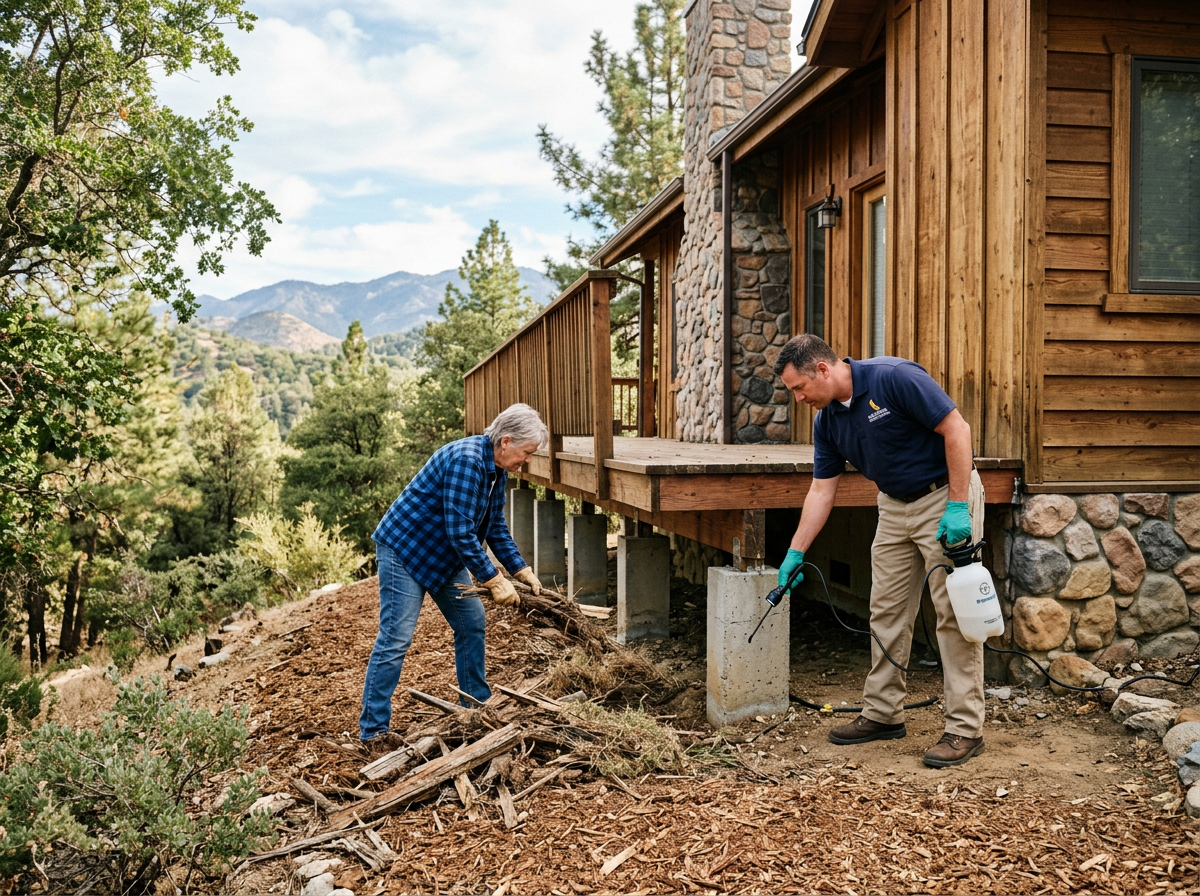
Mountain properties near Tehachapi with dirt crawl spaces and old-growth timber need steady attention to wood-to-soil gaps, moisture sources, and seasonal debris. Start by maintaining at least 6 inches of clearance between any wood and the soil, removing leaf litter and stored lumber within 12 inches of the foundation, and checking attic and crawl spaces twice a year for frass pellets or mud tubes. These actions address the main entry points for both drywood and subterranean termites that appear in the foothills.
Maintaining Wood-to-Soil Clearance on Sloped Lots
Foothill cabins often sit on uneven ground where soil settles against siding or deck posts after winter rains. Walk the perimeter each spring and fall and use a shovel to pull soil back until you restore the 6-inch gap. Trim any shrubs or ground cover that touches the siding, because even brief contact lets drywood termites move from vegetation to timber. Store firewood on metal racks at least 18 inches off the ground and 10 feet from the structure. In crawl spaces, replace any old timber skids that rest directly on dirt with concrete piers or treated blocks. These steps cut off the most common travel routes without requiring chemical barriers.
Controlling Moisture from Irrigation and Seasonal Leaks
Desert-side irrigation and roof runoff create pockets of damp soil that attract subterranean termites to cabin foundations. Route downspouts at least 5 feet away from the crawl-space vents and grade the soil so water flows downhill. Fix any dripping hose bibs or irrigation heads near the house before they soak the perimeter. Inside the crawl space, install a 6-mil vapor barrier over the soil and keep vents open during dry months to reduce humidity. Seasonal cabins that sit closed for weeks should have a neighbor check for new leaks after each rain, because even a small plumbing drip can draw termites to floor joists within a single season.
Monitoring for Early Signs During Occupancy Changes
Cabins used only on weekends or holidays give termites uninterrupted time to feed. Before each stay, shine a flashlight along sill plates and look for 1/16-inch frass pellets near knots or along baseboards. In the crawl space, scan for fresh mud tubes wider than a pencil that run from soil to wood. Note any soft spots in deck boards or porch posts by pressing with a screwdriver. Record what you find on a simple calendar so you can see whether activity increases after heavy spring rains. Early spotting lets you decide whether spot treatment or a full inspection is needed before the next occupancy period.
Scheduling Professional Checks Before Sale or Long Vacancies
When a mountain property changes hands or will sit empty for months, a targeted inspection catches hidden colonies in roof timbers or under insulation. Termite inspection crews familiar with Tehachapi cabins know where old-growth beams meet dirt-filled voids and can map activity without full tenting. Review the findings against the expectations outlined for Tehachapi inspections so you understand which areas need follow-up. Pair the inspection with drywood termite control options if pellets appear in the attic, or subterranean termite control if tubes show in the crawl space. Keeping records of these visits helps future owners see the property has been monitored under local conditions.