
2026-09-16 ·
Termite Treatment Follow-Up and Monitoring in Tehachapi
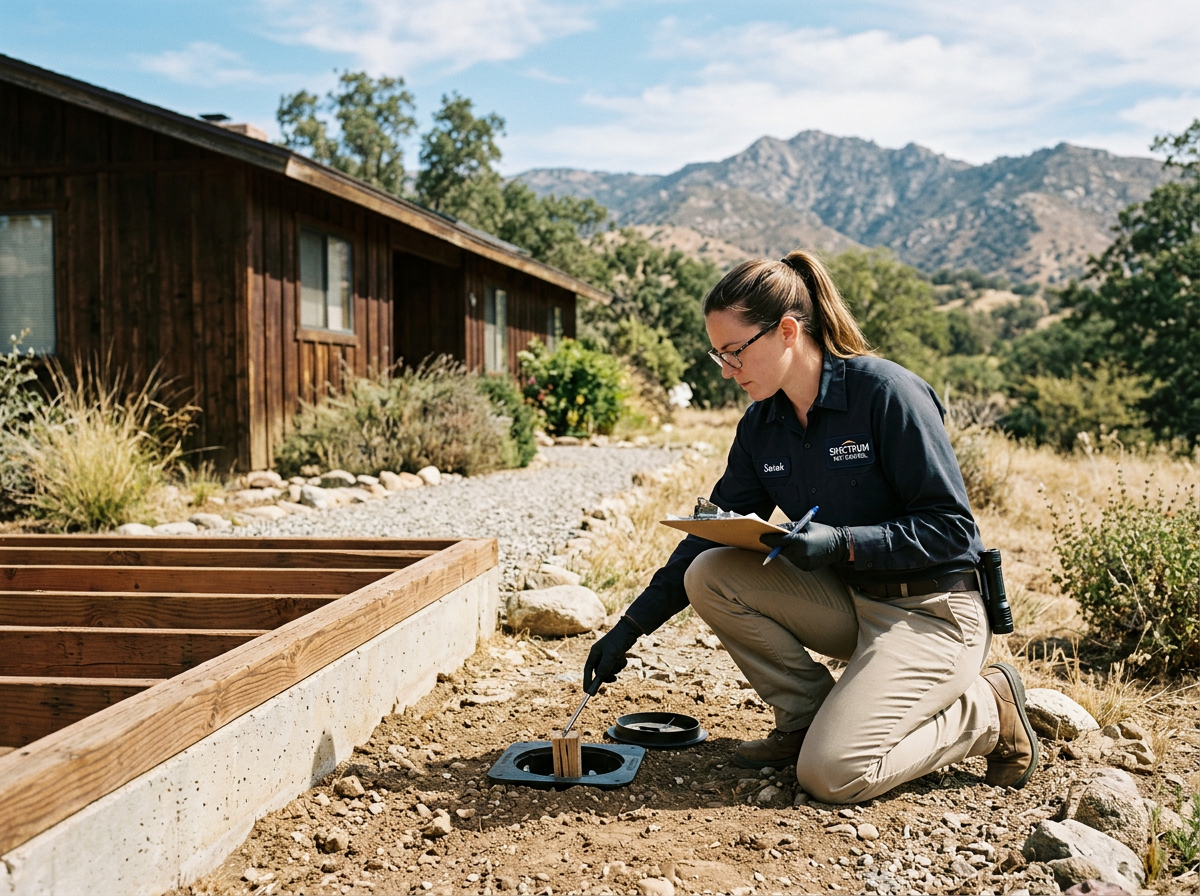
After termite treatment in Tehachapi, follow-up monitoring should start with a professional visit within 30 days, then shift to checks every 3 months for the first year before moving to twice-yearly inspections. This timeline accounts for the area's foothill climate where drywood termites remain active in older timber and subterranean colonies respond to irrigation changes. Homeowners can support these visits by walking crawl spaces and attics monthly to note any fresh signs.
Signs of Renewed Activity in Tehachapi Structures
Homeowners should inspect for frass pellets that resemble sand or coffee grounds near baseboards and window sills, a common indicator of drywood termites in Tehachapi cabins. Mud tubes along foundation walls or in dirt crawl spaces signal subterranean activity, especially after irrigation or leaks in desert-edge properties. Check for discarded wings near light sources during swarm season from March through June. Any new wood damage or hollow-sounding timbers warrant immediate attention. These observations help determine whether spot treatment or a return to liquid soil barriers is needed. Regular visual sweeps reduce the chance of missing early colony re-establishment in seasonal homes.
Recommended Monitoring Schedule After Treatment
A practical schedule begins with quarterly professional visits for the first 12 months following termite treatment, then transitions to inspections every 6 months. In Tehachapi, increase frequency to every 90 days during the first two years if the home sits on a dirt crawl space with old-growth timber. Bait stations should be checked for activity at 10-foot intervals around the perimeter, with records kept of any station replacements. Homeowners can perform monthly interior walks focusing on 6 inches of clearance between soil and wood framing. After heavy rains, add an extra check within two weeks to spot new mud tubes before they expand. This cadence aligns with local moisture patterns without over-inspecting stable properties.
Drywood Versus Subterranean Monitoring Needs
Drywood termites in Tehachapi require attention to frass accumulation and exit holes in exposed beams, while subterranean colonies demand checks for mud tubes and soil moisture near foundations. Follow-up after whole-structure tenting focuses on re-entry points in attics and wall voids, whereas liquid soil barriers call for ongoing bait station reviews spaced 10 to 20 feet apart. Seasonal occupancy homes benefit from pre-occupancy inspections before summer use. Linking these differences to termite inspection reports helps track which treatment method was applied and what signs remain relevant. Consistent records prevent confusion when properties change hands.
When Professional Re-Inspection Becomes Necessary
Schedule a re-inspection if fresh frass pellets appear or new mud tubes form within 12 months of initial treatment. Tehachapi properties near irrigation lines or with past leak issues should receive an extra visit after any plumbing work. Before listing a home, review the prior treatment records alongside the termite treatment before listing a home in Tehachapi guidance to prepare for escrow requirements. Post-rain periods also increase risk, as noted in post-rain termite risks for Tehachapi residences. Document all findings with photos and dates to maintain a clear history for the property at 428 N Curry St, Tehachapi, CA 93561 and similar foothill addresses.